


Hysterectomy
Introduction
The purpose of this tool is to help you decide whether to have a hysterectomy. When making a decision like this, you must balance:
- The reasons for doing the procedure
- The potential health risks, drawbacks, or limitations of the procedure
- Whether there are alternative procedures that may be more appropriate
- Cost
This tool is not a substitute for professional medical care and advice. Work with your doctor to help you make this decision. A second opinion from another doctor may be valuable. Surgery always carries risks, and you should be fully informed about the risks and benefits of this type of surgery. You should also be aware that research evidence is often limited, and the risks of surgery may not be completely understood. For this type of surgery, there is usually no exact right or wrong answer.
Your physician may make certain recommendations to you. However, the final decision about whether to have the surgery rests with you.
What is the surgery?
A hysterectomy is surgery to remove part or all of your uterus.
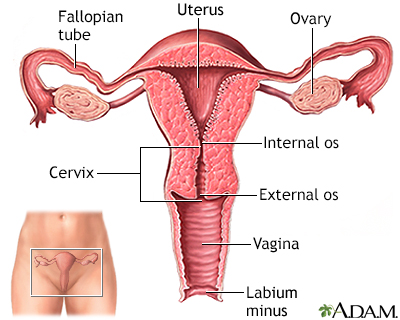
The uterus may be completely or partially removed:
- A partial (subtotal, or supracervical) hysterectomy is removal of just the upper portion of the uterus, leaving the cervix intact.
- A total hysterectomy is removal of the entire uterus and the cervix.
- A radical hysterectomy is the removal of the uterus, the tissue on both sides of the cervix, and the upper part of the vagina.
- Your fallopian tubes and ovaries may also be removed.

There are several ways to do the surgery:
- A total abdominal hysterectomy (TAH) involves a large incision in your abdomen.
- A total vaginal hysterectomy (VH) is performed through an incision in the vagina. In this procedure, the cervix is removed with the uterus.
- A laparoscopic assisted vaginal hysterectomy (LAVH) uses laparoscopic incisions in your abdomen to detach the uterus, which is then removed through the vagina. A laparoscopic procedure uses several smaller incisions in your abdomen. A tiny camera is inserted to help the doctor see the area to be worked on.
- Robotic assisted laparoscopic vaginal hysterectomy (RAVH) uses a robot to help the doctor perform surgery. This procedure also uses laparoscopic incisions in your abdomen.

Hysterectomy is a common operation. It is used to treat fibroids, cancer, endometriosis, chronic vaginal bleeding, and childbirth complications. However, there are often non-surgical approaches to treat certain causes of pelvic pain or bleeding. Talk to your doctor about non-surgical treatments to try first, especially if your condition is something other than cancer.
Key points
A hysterectomy can:
- Save your life in an emergency.
- Cure symptoms like heavy bleeding, pressure, or pain that have not responded to other treatments.
However, be aware that:
- Hysterectomy is major abdominal surgery with risks of bleeding, infection, and possible injury to nearby organs, like the bowel, bladder, blood vessels, and nerves.
- When a hysterectomy is done to treat pain, it does not always successfully reduce pain.
- It will end your ability to get pregnant.
How much time this decision tool will take
5 - 10 minutes
What this tool will provide
- A personalized list of factors for you to weigh
- Questions to ask your doctor
- Alternatives to this surgery
- Recommended reading
|
Review Date:
9/19/2010 Reviewed By: David C. Dugdale, III, MD, Professor of Medicine, Division of General Medicine, Department of Medicine, University of Washington School of Medicine. Also reviewed by David Zieve, MD, MHA, Medical Director, A.D.A.M., Inc. |
- Hartmann KE. Quality of life and sexual function after hysterectomy in women with preoperative pain and depression. Obstetrics and Gynecology. 2004;104:701–9.
- Learman LA, Summitt RL Jr, Varner RE, et al. Hysterectomy versus expanded medical treatment for abnormal uterine bleeding: clinical outcomes in the medicine or surgery trial. Obstetrics & Gynecology. 2004;103(5 Pt 1):824-33.
- Kuppermann M, Varner RE, Summitt RL Jr, et al. Effect of hysterectomy vs medical treatment on health-related quality of life and sexual functioning: the medicine or surgery (Ms) randomized trial. JAMA. 2004;291(12):1447-55.
- Rhodes JC, et. al. Hysterectomy and sexual functioning. JAMA. 1999;282:1934-1941.
- Roovers J, et. al. Hysterectomy and sexual wellbeing: prospective observational study of vaginal hysterectomy, subtotal abdominal hysterectomy and total abdominal hysterectomy. British Medical Journal. 2003 327:774-778.
- Rowe MK, Kanouse DE, Mittman BS, Bernstein SJ. Quality of life among women undergoing hysterectomies. Obstetrics & Gynecology. 1999;93(6):915-21.
© 1997- A.D.A.M., a business unit of Ebix, Inc. Any duplication or distribution of the information contained herein is strictly prohibited.
 All rights reserved.